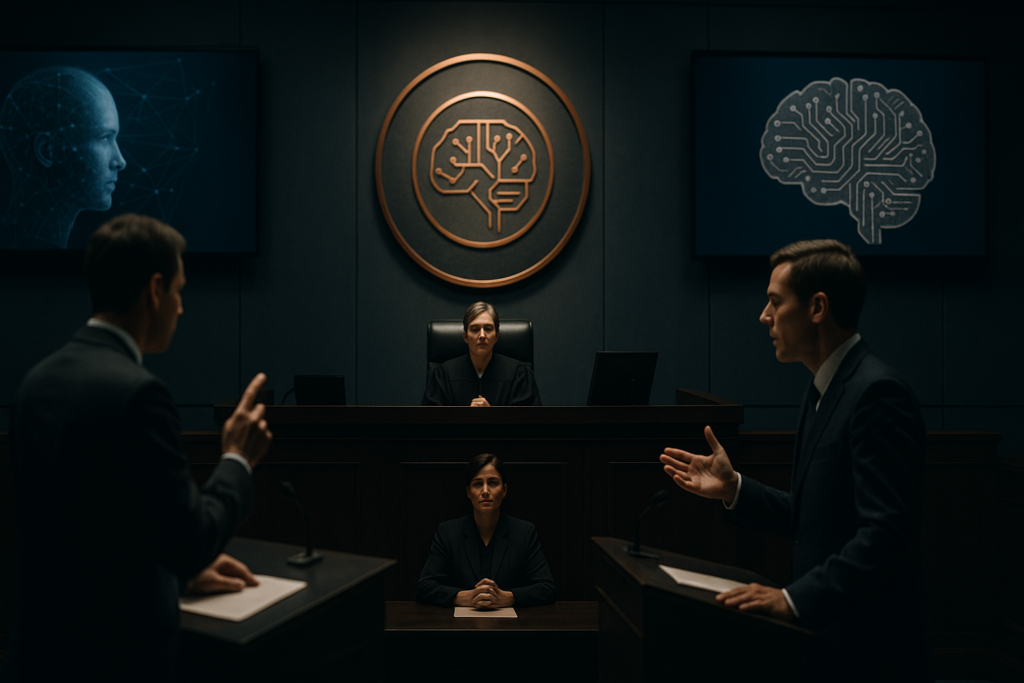
Who is Liable When AI Makes a Mistake?
Imagine your autonomous car suddenly veers off the road, causing an accident. Who’s held accountable? You? The car manufacturer? Or perhaps the software developer? As AI steadily integrates into daily life, the question of liability becomes increasingly complex. When AI systems err, pinpointing responsibility isn’t straightforward. Liability in AI is a multifaceted issue that demands a closer look at existing legal frameworks, technological advancements, and societal impacts.
Key takeaways
- AI mistakes challenge traditional liability models.
- Ownership and usage influence liability.
- AI’s complexity blurs accountability lines.
- Regulatory frameworks are evolving.
- Public understanding is crucial for informed use.
How Does AI Challenge Traditional Liability Models?
AI systems often function autonomously, making decisions without human intervention. This autonomy disrupts traditional liability models, which assume a direct link between human actions and outcomes. For instance, in medical AI applications, if a diagnostic tool fails, it may be unclear whether the liability falls on the healthcare provider, the tool’s developer, or the hospital employing the system. These blurred lines require rethinking how we assign fault and responsibility.
Moreover, AI’s decision-making is often opaque, making it difficult to trace how specific outcomes are reached. This „black box“ nature complicates liability, as stakeholders may struggle to understand the mechanics behind AI decisions. Consider a financial algorithm that results in significant investment losses. If the model’s decision path isn’t transparent, assigning liability becomes nearly impossible. This opacity necessitates new approaches to liability that accommodate AI’s unique characteristics.
Traditional liability models also rely on historical data to predict outcomes. However, AI systems continuously learn and evolve, challenging static legal frameworks. An AI-driven drone may perform flawlessly during testing but fail in an unforeseen real-world scenario. As AI evolves, so too must our understanding of responsibility, demanding dynamic legal models that reflect AI’s adaptive nature.
Why Does Ownership Influence AI Liability?
Ownership plays a pivotal role in determining AI liability. Typically, the entity owning the AI system assumes responsibility for its actions. For example, if a delivery robot causes a mishap, the company that owns and operates it is usually held accountable. However, this straightforward approach can become convoluted with AI’s complexity and interconnectedness, such as in cases where multiple entities have stakes in an AI system.
Consider an AI-powered home assistant. While the device may be owned by the consumer, the software is often developed by a separate entity, and updates may be provided by yet another. In such scenarios, determining liability can become a tangled web of shared responsibilities. Who’s liable if the assistant malfunctions, leading to a security breach? This complexity necessitates clear contractual agreements and understanding of roles within AI ecosystems.
Furthermore, the usage of AI raises questions about liability. For instance, if an AI tool is used beyond its intended purpose and causes harm, should the liability rest with the user or the creator? An AI designed for educational purposes might be modified for commercial use, leading to unanticipated issues. Establishing liability in such cases requires nuanced assessments of intention, usage, and control.
How Does AI Complexity Blur Accountability?
AI’s complexity often results in a diffusion of accountability. Unlike traditional systems, AI operates through intricate algorithms that can be difficult to dissect. This complexity means that when errors occur, identifying a single point of failure is challenging, complicating the assignment of liability. For example, an AI system in healthcare might involve data providers, software developers, and medical professionals, each contributing to the final decision-making process.
The integration of AI into various sectors also means that errors can propagate across interconnected systems, making it harder to pinpoint where liability should lie. In smart cities, for instance, an AI traffic management system might malfunction, leading to congestions or accidents. The liability could be spread across software developers, city planners, and even hardware manufacturers, illustrating how AI’s complexity necessitates a multifaceted approach to accountability.
Moreover, AI’s ability to learn and adapt further muddies the waters of responsibility. As AI systems evolve, their behavior can deviate from their initial programming, making it difficult to hold any single party accountable for mistakes. This evolving nature requires that liability frameworks adapt to address the fluidity of AI systems, ensuring that accountability keeps pace with technological advancements.
What Are the Limitations of Current Legal Frameworks?
Current legal frameworks often fall short in addressing AI liability. Many laws were created with traditional technologies in mind, assuming human oversight and control. However, AI’s autonomous nature poses new challenges that existing regulations struggle to address, such as the need for clear criteria to determine liability in AI-related incidents.
Regulatory bodies are now exploring ways to accommodate AI within existing legal structures. Some regions are considering AI-specific liability laws that account for the technology’s unique traits. For instance, proposals for AI regulations might include mandatory transparency requirements, ensuring that AI decision-making processes are understandable and traceable. Such measures aim to address the limitations of current laws, providing clearer guidance on AI liability.
However, the pace of legal adaptation often lags behind technological development. As AI continues to advance rapidly, the legal system must keep up to ensure that accountability and protection are adequately maintained. This requires ongoing dialogue between technologists, lawmakers, and the public to develop robust frameworks that address AI’s challenges while fostering innovation.
What Solutions Can Address AI Liability Concerns?
Addressing AI liability concerns requires a combination of technological, legal, and ethical solutions. One approach is to enhance transparency in AI systems, ensuring that their decision-making processes are understandable and auditable. This could involve developing tools that allow stakeholders to trace AI decisions, making it easier to identify where responsibility lies when errors occur.
Another solution is the establishment of clear guidelines and standards for AI development and deployment. By defining best practices and compliance requirements, stakeholders can mitigate risks and ensure accountability. Such standards could include mandatory testing phases, regular audits, and certification processes that validate AI systems‘ safety and reliability.
Moreover, fostering collaboration between AI developers, users, and regulators is crucial. Engaging all stakeholders in dialogues about AI’s implications can lead to more comprehensive solutions that address liability concerns. By working together, these groups can develop frameworks that balance innovation with accountability, ensuring that AI’s benefits are realized without compromising safety or ethics.
What Concrete Benefits Can Evolve from AI-Specific Regulations?
AI-specific regulations promise several concrete benefits. Firstly, they can provide clearer guidelines on liability, reducing ambiguity and ensuring fair accountability. For instance, if an AI system fails, stakeholders will have a clearer understanding of their responsibilities, minimizing legal disputes and fostering trust in AI technologies.
Additionally, such regulations can promote transparency and consumer protection. By mandating that AI systems adhere to specific standards, users can be assured of their safety and reliability. This can enhance public confidence in AI applications, encouraging wider adoption and innovation across various sectors.
Furthermore, AI-specific regulations can foster global collaboration. As countries develop frameworks that address AI’s unique challenges, international standards could emerge, facilitating cross-border cooperation and trade. This global approach can ensure that AI technologies are developed, deployed, and monitored responsibly, maximizing their potential benefits while minimizing risks.
What Are the Next Steps in Addressing AI Liability?
Addressing AI liability is an ongoing process that requires proactive measures. Stakeholders must continue to engage in discussions about AI’s implications, exploring new frameworks and solutions that address liability concerns. This involves collaboration between technologists, lawmakers, and the public to develop comprehensive approaches that ensure AI’s safe and responsible use.
Investing in AI literacy is also crucial. As AI becomes more prevalent, individuals need to understand its capabilities, limitations, and implications. This education can empower users to make informed decisions about AI technologies, reducing reliance on legal recourse by promoting responsible use and understanding.
Finally, ongoing research and development are vital. As AI technologies evolve, so too must our understanding of their impacts and potential risks. Continued investment in AI research can drive innovations that address liability concerns, ensuring that AI systems are safe, transparent, and accountable.
FAQ
Who is responsible if an AI system causes harm?
Liability can vary depending on ownership, usage, and contractual agreements. Typically, the entity owning or operating the AI system assumes responsibility. However, the complexity of AI often requires nuanced assessments to determine liability, considering factors like intended use and control.
How do current laws address AI liability?
Existing laws often struggle with AI’s unique challenges. Many were designed for traditional technologies and assume human oversight. Regulatory bodies are working to adapt legal frameworks, potentially introducing AI-specific regulations that address these limitations and provide clearer guidelines on liability.
Can AI developers be held liable for system failures?
AI developers can be held liable if failures result from negligence or non-compliance with standards. However, liability often depends on contractual agreements and the specific circumstances of each case. Clear guidelines and standards can help reduce ambiguity and ensure fair accountability.
How can transparency improve AI liability?
Transparency in AI systems can make decision-making processes understandable and traceable. This clarity helps stakeholders identify responsibility when errors occur, reducing ambiguity and fostering trust in AI technologies. Transparent systems also facilitate compliance with regulations and standards.
What role does public understanding play in AI liability?
Public understanding is crucial for informed AI use. As AI becomes more prevalent, individuals need to comprehend its capabilities, limitations, and implications. This knowledge can empower users to make responsible decisions, reducing reliance on legal recourse and promoting safer AI deployment.