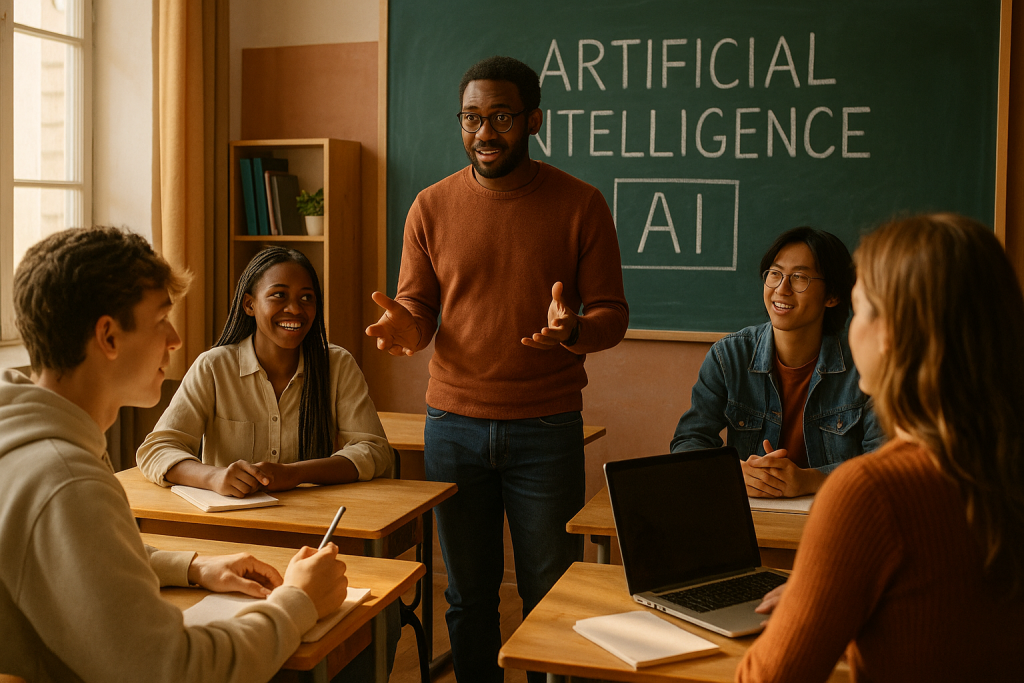
Is ChatGPT a Game-Changer in Education?
Imagine a classroom where students can ask questions 24/7 and get instant answers. This is the promise of ChatGPT in schools. But, is it truly a revolution or just a passing trend? ChatGPT, an AI language model, offers students personalized assistance and can help teachers with grading and lesson planning. However, its integration in education raises questions about its impact on learning and critical thinking.
What Challenges Does ChatGPT Present?
While ChatGPT offers numerous possibilities, it also brings challenges. One major concern is the potential for students to rely on AI for answers without understanding the material. This could lead to a decline in critical thinking skills. For example, if a student uses ChatGPT to solve math problems without learning the underlying concepts, their foundational knowledge might suffer.
Another issue is data privacy. Schools must ensure that student data is protected when using AI tools. This requires robust security measures and clear policies, which can be challenging to implement.
How Does ChatGPT Impact Students?
ChatGPT can enhance learning experiences by providing personalized feedback and support. For instance, a student struggling with English grammar can use ChatGPT to receive examples and explanations, allowing for self-paced learning. This can be particularly beneficial for students who need extra help outside of school hours.
Yet, there’s a risk that students might become over-reliant on AI, bypassing the learning process. Educators need to find a balance, ensuring that technology complements traditional learning rather than replacing it.
Why Are Traditional Approaches Insufficient?
Traditional education methods often struggle to meet the diverse needs of modern classrooms. Teachers face large class sizes and limited resources, making individualized attention difficult. ChatGPT offers a scalable solution, providing instant support to students without adding to teachers‘ workloads.
However, traditional approaches emphasize the development of interpersonal skills and critical thinking. These skills are harder to nurture through AI, highlighting the need for a hybrid approach that combines AI with human interaction.
What Solutions Can Integrate ChatGPT Effectively?
To harness ChatGPT’s potential, schools should implement structured guidelines for its use. Training programs can help teachers integrate AI into their lesson plans effectively. Additionally, creating a curriculum that blends AI tools with traditional teaching can ensure a balanced approach to learning.
Schools might also consider pilot programs to test the effectiveness of ChatGPT in various subjects, gathering data and feedback to refine its use. This cautious approach can prevent potential pitfalls and maximize benefits.
What Are the Concrete Benefits?
When used appropriately, ChatGPT can offer several benefits. It can save teachers time by automating routine tasks such as grading and providing feedback. This allows educators to focus more on interactive and engaging activities with students.
For students, ChatGPT can provide additional resources and explanations, helping them to grasp complex topics more easily. In languages, for example, students can practice conversation with AI, receiving instant corrections and suggestions.
What Is the Future of AI in Education?
Looking ahead, AI like ChatGPT could transform education by making learning more accessible and personalized. However, it will be crucial to address challenges related to data privacy and dependence on technology. Schools will need to continuously adapt their strategies and remain vigilant about the ethical implications of AI.
Ultimately, the success of AI in education will depend on how well it is integrated into the existing framework, ensuring it acts as a supportive tool rather than a replacement for traditional learning.
FAQ
How can ChatGPT enhance classroom learning? ChatGPT can provide personalized feedback and resources to students, allowing for self-paced learning and freeing teachers to focus on more interactive teaching methods.
What are the risks of using ChatGPT in schools? The main risks include potential over-reliance on AI by students and concerns about data privacy. Both require careful management and clear guidelines.
Can ChatGPT replace teachers? No, ChatGPT cannot replace teachers. It is a tool to support and enhance teaching, enabling teachers to focus on critical thinking and interpersonal skills.
How can schools ensure the ethical use of ChatGPT? Schools can establish clear policies, provide training for teachers, and continuously monitor the impact of ChatGPT to ensure it is used ethically and effectively.